
Would your safeguarding policy work in practice?
If a child needed to rely on your safeguarding policy today, would it actually work for them?
Not on paper.
In practice.
Most leaders I work with care deeply about safeguarding.
But many quietly carry a question they don’t always say out loud:
How confident can we really be about what is happening in everyday practice across the organisation?
From the leadership table, practice is often harder to see than we assume.
Over time I’ve noticed that when safeguarding issues emerge, they rarely appear suddenly.
They usually sit behind patterns that have been present for a while.
Things like:
Policy confidence, limited practice visibility
Leaders feel confident policies are strong, but have limited visibility of how safeguarding actually works day to day.
Safeguarding attention drift
After an incident, review or audit, safeguarding receives strong attention. Over time operational pressure takes over and attention moves elsewhere.
Voice without response
Staff or families raise concerns, but systems don’t always respond in ways that build confidence that speaking up matters.
Diffused accountability
Everyone agrees safeguarding matters, but it’s not always clear who is responsible for ensuring it’s working in practice.
None of these patterns mean organisations don’t care about safety.
But they do signal where leadership attention matters most.
Because safeguarding culture isn’t created by policy alone.
It’s shaped by what leaders notice, ask about, and keep visible over time.
For leadership teams, the real question becomes simpler than we think.
If a safeguarding concern arose tomorrow, would your systems actually work the way you believe they would?
Not on paper.
In practice.
It’s a question many leadership teams are beginning to ask more deliberately.
Why some safeguarding work struggles before it even begins
Over the years I’ve noticed a question that leaders wrestle with
How can serious harm occur inside organisations that appear structured, supervised and compliant?
Safeguarding inquiries have shown this pattern many times.
Safeguards existed.
Policies existed.
Oversight existed.
And yet everyday practice drifted from what leaders believed was happening.
Not because leaders didn’t care.
But because safety is harder to see from the inside than we often assume.
Working with leadership teams, I’ve noticed something similar.
Sometimes organisations begin important safeguarding work with genuine commitment.
Policies get written.
Training gets scheduled.
Projects get launched.
But leadership expectations stay unclear.
And when leadership expectations stay unclear, something predictable follows.
Responsibility drifts.
Attention moves.
Important priorities quietly lose momentum.
In my earlier posts I wrote about two leadership challenges that often show up later in this work.
Leaders not being able to fully see what is happening in practice.
And leaders struggling to hold safeguarding priorities long enough for them to embed.
But there is often an earlier moment that shapes both of those things.
How the work begins.
Starting Well is the conversation I have with leadership teams before deeper safeguarding work starts.
It creates space to step back and talk honestly about what safeguarding leadership actually requires.
In this facilitated session we explore:
• what safeguarding leadership actually requires
• how leadership attention shapes organisational culture
• why compliance activity alone doesn’t create safety
• the leadership conditions that allow safeguarding priorities to hold over time
• the responsibilities leaders carry when shaping a child-safe culture
Because safeguarding work rarely struggles due to lack of policy. More often it struggles because leadership expectations were never fully named at the beginning.
Starting well doesn’t solve everything.
But it helps leadership teams begin with the shared clarity needed for the work to hold.
This is the work Starting Well is designed to support.

When Compliance Doesn’t Mean Safety
Organisations can look fully compliant and still not be safe in practice.
Over recent weeks I’ve been writing about something many leaders already sense.
Green lights don’t always mean safe.
Reports don’t always show lived experience.
Safety doesn’t live in dashboards or policies.
It lives in what people experience day to day.
What gets noticed.
What gets acted on.
What gets reinforced.
What gets missed.
Across safeguarding inquiries and reviews, the same pattern appears again and again.
Organisations had requirements in place.
But leaders did not always see or recognise how safety was actually playing out in practice.
That matters.
Because leaders are responsible for the culture people experience, not only the systems that document it.
Seeing Clearly is a facilitated leadership insight process.
It is the work I do with leadership teams to help them gain clearer line-of-sight to how safety is actually being experienced across their organisation.
Using the Integria Insight Lens in a structured leadership workshop, leaders surface and interpret lived-experience signals to see strengths, risks, and blind spots, and clarify where leadership accountability sits.
Because visibility on its own is not enough.
Seeing Clearly helps leadership groups:
recognise how leadership attention and response shape culture
make shared sense of lived-experience signals
see where safety is strong, fragile, or inconsistent
clarify where leadership responsibility sits
agree focused priorities for strengthening culture
For organisations implementing the Child Safe Standards, Seeing Clearly sits alongside existing work. It helps leaders understand whether safety is actually being lived, not simply assumed.
Because culture is not created by policy alone.
It is shaped in everyday leadership attention, behaviour, and response.
If you are a leader working to understand how safety is actually experienced in your organisation, this is the work Seeing Clearly is designed for.
Why the Willy Wagtail?
It all begins with an idea.
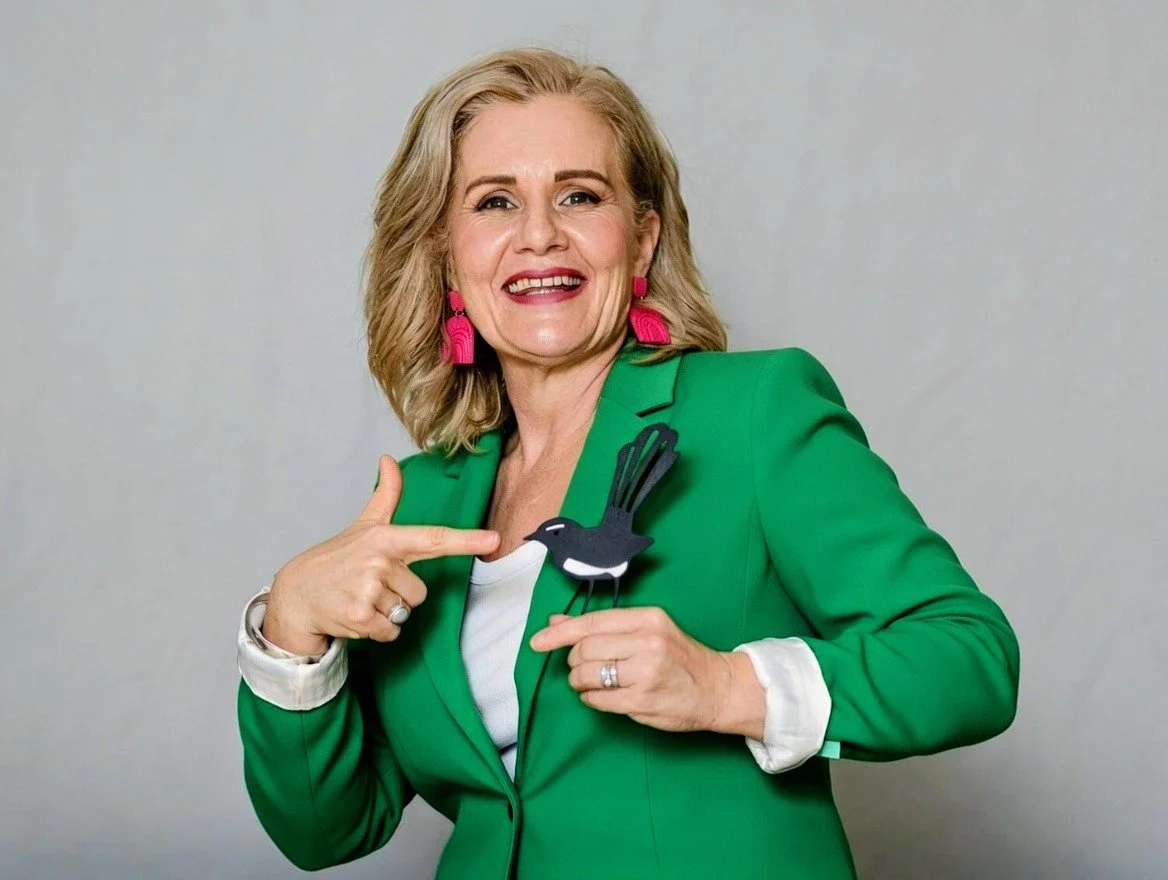
A few people have asked me why I chose the Willy Wagtail as the Integria logo.
For as long as I can remember, I’ve loved the Willy Wagtail.That little bird has been with me through many seasons of my life, especially when I’ve needed to draw on courage.
It’s small, but it’s fierce as hell. It doesn’t back down from much larger birds. It stands its ground. It protects. And it makes itself heard.
Across different points of my life, especially when I’ve stepped into new roles, felt out of my depth, or doubted my own voice, I’ve leaned on that image again and again.
I’ve had one pinned on my wall at work.
One in my notebook.
One on my computer.
At times, even a small one on the sun visor in my car.
Not as decoration, but as a reminder.
That even small voices can be strong.
That courage isn’t about size or status.
That you can feel fear and still stand your ground.
That you can be gentle and still be fierce when it matters.
So when it came time to choose a symbol for Integria, the Willy Wagtail felt right.
It carries the same things that have carried me, and the values this work is built on: courage, determination, and the resolve to keep showing up and protecting what matters, even when your voice feels small.
Seeing Clearly
It all begins with an idea.
One of the hardest questions for any leader is this:
How do you really know what’s happening in your organisation?
Not just what gets reported.
Not what gets summarised.
Not what gets polished into a schmick board paper or squeezed into a colour coded dashboard.
But what people are actually experiencing.
What they’re worried about.
What feels uneasy or unfinished in the day-to-day.
In child safe organisations, that question matters even more.
Because safety doesn’t live in reports.
It lives in lived experience.
Formal information tells you what can be measured.
It doesn’t always tell you what people are noticing, worrying about, or holding back.
And let’s be honest – the things that travel upward most easily are usually:
The good news.
The wins.
The shiny updates.
The things that make it look like everything is under control and on track.
The harder things don’t move so smoothly.
Early concerns. Uncertainty. Unease.
That gnawing gut feeling that something isn’t quite right.
Those things need something different to travel.
They need trust.
They need psychological safety.
They need leaders who can stay curious instead of defensive.
Leaders willing to listen beyond the surface.
Leaders prepared to sit with what isn’t neat or resolved yet.
So “seeing clearly” isn’t really about more data.
It’s about better ways of knowing.
Better ways of listening.
Better ways of paying attention.
Ways that make it safe for people to speak honestly, not just perform, comply, or keep quiet.
Because in child safe practice, what leaders are able to see shapes everything.
What they notice.
What they act on.
What they interrupt.
What they protect.
And what leaders can’t see, or choose not to see, can quietly turn into risk.
In the end it comes down to a simple truth:
You can only respond to what your leadership presence makes visible.
Your presence creates a ripple.
It all begins with an idea.
Leaders shape the tone, but communities feel the impact.
Leadership does not end at the office door. Its influence follows people home.
There was a moment I realised something we don't say enough.
When people do not feel safe to speak at work, it does not stay at work.
It travels into families, into communities, into the places our kids grow up in.
People are not just workers. They are parents, neighbours, aunties, uncles, coaches, volunteers, CWA members, footy mums and people standing in line at Woolies.
And the culture they experience at work, whether they feel safe, respected and heard shapes how they show up everywhere else.
That is the real ripple effect.
A psychologically safe workplace does not stay contained. It lives in the community because people carry those experiences with them. You see it in how they speak, listen and respond.
When people feel safe to speak at work, they speak up elsewhere. They notice things earlier. They show young people what courage can look like. They are not afraid of truth.
And this everyday courage is what keeps children safe.
Not posters. Not slogans. Not mandatory training sessions.
Culture does. Communities do. And leaders influence how strong the ripple becomes.
I have seen workplaces where the policies were perfect, yet people still did not feel safe to speak. The weight of that silence followed them.
I have also seen teams where people were safe to speak, and that confidence travelled. It shaped how they made decisions, questioned things, supported others and stood their ground.
Leaders are not just shaping workplaces. They are shaping communities. And communities keep children safe.
This is why I do this work.
Leadership presence is not just about organisational culture. It is about social culture. It is about the quiet ways safety is strengthened or weakened long before it becomes visible. It is about the behaviours we model, the conversations we make space for, the tone we set, and the way all of that ripples into the everyday lives of the people around us.
And while my work sits in child safety, the truth is this: cultures that support children to speak, question and be respected are the same cultures that uphold safety and dignity for all.
Leadership shapes the conditions for culture, but communities live with the consequences.
Safeguarding does not begin when something goes wrong. It begins much earlier, in the tone leaders set and the conversations they make space for long before an incident is visible.
We cannot fix this at the level of policy alone. We fix it by strengthening environments where people feel safe to speak up, are believed when they do, notice small things early and feel empowered to hold one another, including leaders, accountable.
This is the real work of culture. This is how communities become safer.
One leader. One team. One moment of courage at a time.
Because when leaders do not listen, the consequences do not fall on systems. They fall on people.
Culture keeps children safe, not compliance
It all begins with an idea.
Over the last few months, I’ve had conversations across our sector that have left me with a very real concern: That the Child Safe Standards will be treated as:
“just another compliance requirement.”
If that happens, we will miss the point entirely.
The Standards aren’t another folder, another audit, or another checkbox. They are not a "tick and flick"
They are an opportunity to shift how we lead, how we listen, how early we act, and the cultures we build.
The Royal Commission showed us what happens when policies and procedures are in place on paper… but culturally, people don’t feel safe to speak up.
We’ve been given a moment to do this differently.
To build cultures where accountability is normal, psychological safety is real,
and child safety is lived, not documented.
This isn’t “another thing.”
This is the work.